
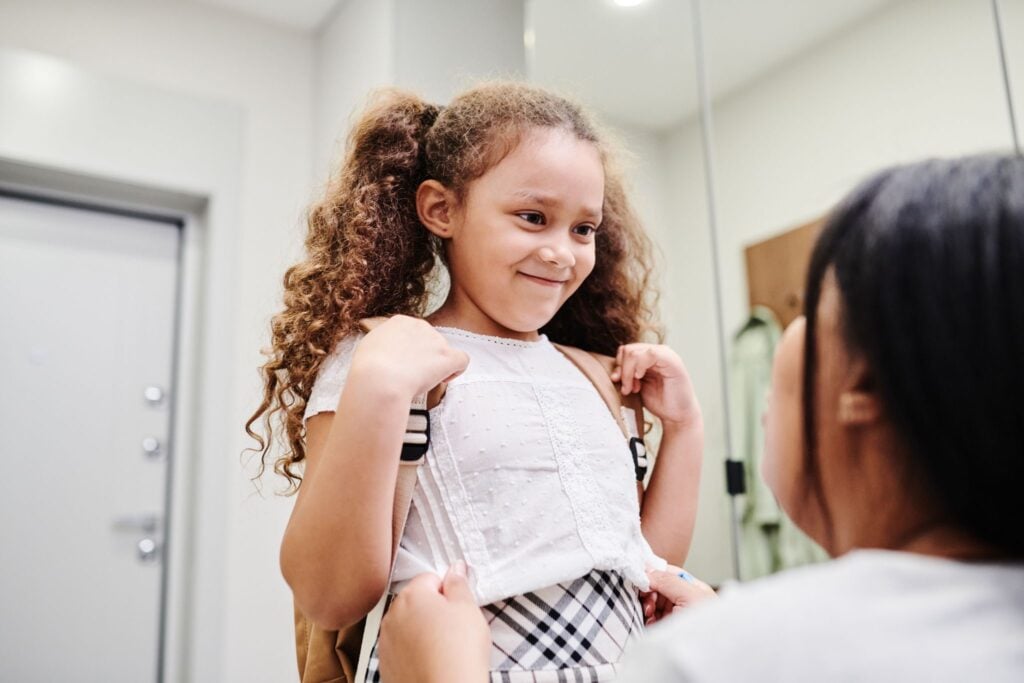
Children generally enrol in their first year of school when they turn five, and attendance is mandatory when they turn six. And somewhere around a child’s fourth birthday, a nagging question often starts bothering many parents – is she truly ready or just old enough?
It is a legitimate concern, but the answer turns out to be unrelated to whether he knows how to write his name or count to twenty, which comes soon enough. The important thing here is less obvious and not easy to measure with an activity on a fridge magnet. Is your child able to handle a change of plans, ask for help from people other than you, and bounce back from a disappointment?
This is how you can know it, along with one thing you can do at home for each.
Readiness Is Emotional Before It Is Academic
Picture two four-year-olds. One knows every letter but comes undone the moment the routine shifts. The other cannot quite manage the alphabet yet but shrugs off a disappointment and wanders over to ask an adult for help.
The second child is closer to ready. Independence, resilience, communication, and curiosity: that is the real foundation, and the academic layer builds on top of it fast once it is there. So the signs below are about how a child copes and connects, not what they can recite.
1. There Is a Rhythm to Their Day
You see it in the small stuff. The hat that goes on without a reminder, the toys that get packed away, and the move from breakfast to shoes that no longer ends in a standoff. Those little routines are independence in miniature, and a classroom runs on them. Want to build the muscle? Hand over a job that is genuinely theirs, feeding the dog or laying out tomorrow’s shoes, then leave it to them.
2. They Play With Other Kids, Not Just Next to Them
Sharing, taking turns, waiting for a go. It sounds basic, and it is anything but. A child who can join a game and survive losing it will manage a room of twenty. Playdates help. So, oddly, does letting them lose at Snap on the kitchen floor now and then, because losing gracefully is a skill of its own.
3. They Will Speak Up
Plenty of children are non-stop talkers at home and then clam up the second a stranger is involved. What you are watching for is the moment they start bridging that gap: asking a question, saying they need the toilet, telling an adult what they reckon. Notice those moments and quietly celebrate them, wobbly ones included. Next time you are at the shops, let them do the talking, and sit on the urge to answer for them.
4. They Try Again After It Goes Wrong
This is the big one. Confidence is not getting it right first time. It is being willing to get it wrong and have another go. The rebuilt tower, the second attempt at the zip. When it happens, praise the trying rather than the result. “You kept at it even though it was tricky” does far more than “good girl” ever will.
5. They Want to Know Why
The endless why phase is exhausting, and it is also a very good sign. A child lost in a picture book, or crouched over an ant on the footpath, is wired to keep learning. Feed it cheaply: every so often, answer a “why” with “what do you think?” and watch them clock that their own ideas count.
6. They Can Handle the Small Practical Stuff
Toileting alone. Washing hands. Blowing a nose. Opening a lunchbox, which is less trivial than it sounds. None of it is academic, but a child who can manage their own body and belongings walks in with far less on their plate. One practical tip: practise the actual lunchbox before term starts, because a fiddly clip or container is exactly the kind of small frustration worth heading off before day one.
7. They Can Wave You Off
Not without a wobble, necessarily. What you are watching for is the recovery. A child who has a teary moment at drop-off and then settles once you have gone is showing genuine emotional readiness. Keep your goodbyes short and certain. A quick hug and a clear “see you this afternoon” tells them you trust the place, which is how they learn to trust it too. Drawn-out, anxious farewells say the opposite.
How a Good Early Learning Program Does the Heavy Lifting
If that list left you thinking you are not quite there, relax, because that is exactly what a quality program is for. Australian early learning runs on a play-based national framework, which is a formal way of saying that the building, the storytelling and the shared games are all quietly engineered to grow the very skills above. In Victoria, the kindergarten year before school is built around that guided play: steady routines, hours in the company of other children, and educators whose job is partly to coax the quiet ones into speaking up.
The only real way to judge a program is to stand inside one. Plenty of families across Melbourne’s south-west tour a few nearby options before committing, and calling in to a local Altona Meadows kindergarten is the simplest way to see how those daily rhythms and small social moments add up to a child ready for the jump to school.
And If They Are Not Ticking Every Box?
Then you have a perfectly normal almost-schooler on your hands. Readiness is a range, not a report card, and hardly any child arrives with all seven boxes ticked. Have a proper conversation with their educators, who see your child inside a group and can tell you honestly where they are flying and where a little more time would help.
Mostly, though, trust the small signals. The kid pulling their own hat on and dusting themselves off after a stack is telling you more than any worksheet ever could.


Marissa is a Pediatric Occupational Therapist turned stay-at-home mom who loves sharing her tips, tricks, and ideas for navigating motherhood. Her days are filled starting tickle wars and dance parties with three energetic toddlers and wondering how long she can leave the house a mess until her husband notices. When she doesn’t have her hands full of children, she enjoys a glass (or 3) of wine, reality tv, and country music. In addition to blogging about all things motherhood, she sells printables on Etsy and has another website, teachinglittles.com, for kid’s activity ideas.


